High-Demand Courses to Study in New Zealand – 2026


Studying in New Zealand has become an increasingly smart choice for international students planning their education in 2026. With a future-focused economy, globally respected universities and clear post-study work pathways, the country offers more than just high-quality education—it offers real career outcomes. Choosing from the high-demand courses to study in New Zealand – 2026 can significantly improve your employability, salary potential and long-term settlement options.
This guide explores the most in-demand fields, why they matter in 2026, and how you can choose the right course aligned with New Zealand’s evolving job market.
Overview of Education and Job Market Trends in New Zealand (2026)

New Zealand’s education system is closely aligned with workforce needs. By 2026, the country will continue to experience skill shortages across technology, healthcare, construction, education and sustainability-related sectors. Government investment in digital transformation, infrastructure, renewable energy and public health is driving strong demand for qualified graduates.
Why New Zealand Is a Top Study Destination in 2026
New Zealand offers a rare balance of academic excellence and lifestyle benefits. Degrees are internationally recognized, class sizes are smaller, and teaching emphasizes practical, real-world skills. Graduates also benefit from generous post-study work visas, making it easier to gain local experience after graduation.
Skills Shortage Lists and Their Impact on Course Demand
Many high-demand courses align directly with New Zealand’s Green List and long-term skill shortage roles. Studying in these areas can open pathways not only to employment but also to residence, making course selection a strategic decision rather than just an academic one.
Factors That Make a Course High-Demand in 2026
Not all popular courses lead to strong outcomes. High-demand courses share several defining characteristics.
Employment Rate After Graduation
Courses linked to industries facing talent shortages often lead to faster job placement and higher employability rates for graduates.
Salary Growth and Long-Term Career Stability
Fields such as IT, engineering, healthcare, and analytics consistently offer above-average salaries and stable career progression.
Industry Growth and Government Investment
Sectors receiving sustained public and private investment—like renewable energy, digital services, and healthcare—create long-term demand for skilled professionals.
High-Demand STEM Courses in New Zealand

Science, technology, engineering, and mathematics (STEM) remain at the heart of New Zealand’s future economy.
Information Technology and Computer Science
Information Technology and Computer Science remain among the most high-demand courses in New Zealand for 2026. IT graduates are highly employable due to the country’s rapid digital transformation across industries such as finance, healthcare, education, and e-commerce. Courses in software development, cloud computing, cybersecurity, networking, and web development equip students with practical, job-ready skills.
As businesses continue expanding their digital infrastructure, the demand for skilled IT professionals continues to grow. Graduates can pursue careers as software engineers, cybersecurity analysts, cloud specialists, and IT consultants, making this field one of the most future-proof career choices.
Engineering and Advanced Manufacturing
Engineering and Advanced Manufacturing are consistently ranked among the top high-demand courses in New Zealand. Civil, electrical, mechanical, and mechatronics engineering professionals are urgently needed to support national infrastructure projects, urban development, renewable energy initiatives, and sustainable construction.
Engineering programs focus on problem-solving, innovation, and real-world technical skills, preparing graduates for stable and well-paying careers. With ongoing government investment in transport, housing, and energy systems, engineering graduates benefit from strong job security and long-term career growth.
Data Science, AI, and Machine Learning
Data Science, Artificial Intelligence (AI), and Machine Learning are rapidly emerging as some of the most valuable technology-focused study areas in New Zealand. As organizations increasingly rely on data-driven decision-making, professionals skilled in data analytics, predictive modeling, automation, and AI technologies are in high demand.
Graduates in this field can work in banking, healthcare, logistics, retail, and government sectors. With the rise of big data and digital innovation, expertise in Data Science and AI offers excellent salary potential and global career opportunities in 2026 and beyond.
High-Demand Healthcare and Life Sciences Courses

Healthcare remains one of the most critical sectors in New Zealand.
Nursing and Midwifery
Nursing and Midwifery remain among the most high-demand healthcare courses in New Zealand. Nurses and midwives are consistently listed on national skill shortage lists due to increasing healthcare needs and an aging population. Hospitals, aged care facilities, and community health centers actively recruit qualified professionals across the country.
Graduates benefit from strong job security, competitive salaries, and clear career progression pathways. In addition, these professions often provide favorable immigration and residency options, making Nursing and Midwifery both a stable and strategic career choice in 2026.
Public Health and Health Management
Public Health and Health Management are rapidly growing fields as healthcare systems become more complex and technology-driven. There is rising demand for professionals trained in health administration, healthcare leadership, public policy, and population health management.
Graduates in this field work in government agencies, hospitals, NGOs, and research institutions, helping improve healthcare delivery and community well-being. With increasing focus on preventive care and health system efficiency, this discipline offers strong long-term career potential in New Zealand.
Biotechnology and Biomedical Science
Biotechnology and Biomedical Science are emerging as high-demand life science programs in New Zealand. These courses prepare students for careers in medical research, pharmaceuticals, diagnostics, and biotechnology innovation.
As global health challenges increase and populations age, the demand for skilled biomedical professionals continues to grow. Graduates can contribute to vaccine development, laboratory research, medical testing, and scientific innovation, making this field both impactful and future-focused.
Business, Management, and Finance Courses in Demand

Business education in New Zealand increasingly blends theory with digital and analytical skills.
Business Analytics and Digital Marketing
Business Analytics and Digital Marketing are among the most high-demand business courses in New Zealand for 2026. Employers increasingly value graduates who can interpret complex data, manage digital campaigns, and support strategic decision-making in competitive markets.
Courses in this field focus on data visualization, market research, SEO, social media strategy, performance marketing, and customer behavior analysis. As businesses shift toward data-driven growth and online expansion, professionals skilled in analytics and digital marketing enjoy strong career prospects across industries.
Accounting, Finance, and Professional Services
Accounting, Finance, and Professional Services remain essential pillars of New Zealand’s economy. Qualified accountants and finance professionals are needed across corporate, government, and small business sectors, particularly those familiar with international financial reporting standards and regulatory compliance.
These programs prepare students for careers in auditing, taxation, financial planning, risk management, and corporate finance. With consistent demand and clear professional certification pathways, this field offers stability, competitive salaries, and long-term career growth.
Supply Chain and Logistics Management
Supply Chain and Logistics Management have gained significant importance due to global trade disruptions and evolving international markets. New Zealand’s export-driven economy requires skilled professionals in procurement, inventory management, transportation planning, and supply chain optimization.
Graduates in this field play a critical role in ensuring efficient movement of goods and services, reducing costs, and improving operational efficiency. As global commerce becomes more interconnected, expertise in logistics and supply chain strategy continues to be highly valued in 2026.
High-Demand Education and Social Science Courses

Early Childhood and Secondary Education
Qualified teachers remain in high demand across New Zealand, especially in early childhood education and secondary school STEM subjects such as mathematics, science, and technology. As the population grows and classrooms become more diverse, the need for well-trained educators continues to rise. Early childhood education plays a crucial role in shaping children’s cognitive, emotional, and social development during their formative years. Because of this, the government places strong emphasis on hiring certified early learning teachers who understand child psychology, curriculum design, and inclusive teaching methods.
At the secondary level, the shortage is even more noticeable in STEM disciplines. Schools across the country are actively seeking teachers who can prepare students for future-focused careers in engineering, IT, healthcare, and scientific research. Educators with strong subject knowledge and practical teaching experience often benefit from stable employment, competitive salaries, and clear career progression pathways. Additionally, teaching qualifications in shortage areas may support long-term work and residence opportunities, making this field both professionally rewarding and strategically beneficial for international graduates.
Social Work and Community Development
As New Zealand’s communities become increasingly multicultural and socially complex, the demand for skilled professionals in social work and community development continues to grow. Social workers play a vital role in supporting vulnerable individuals and families, including children, the elderly, migrants, and people experiencing mental health challenges. Their work often involves crisis intervention, advocacy, case management, and collaboration with healthcare providers, schools, and government agencies.
Community development professionals focus on strengthening neighborhoods, improving access to services, and promoting social inclusion. With rising awareness of mental health, domestic wellbeing, and social equity, organizations are actively recruiting graduates trained in counseling, psychology, public policy, and community engagement. These roles require empathy, cultural competence, and strong communication skills, but they also offer meaningful, purpose-driven careers that create real social impact.
In short, both education and social work fields provide stable career opportunities while allowing professionals to contribute positively to society. For students seeking careers that combine job security with community impact, these pathways remain among the most valuable options in 2026
Green Energy, Environment, and Sustainability Courses

New Zealand’s commitment to sustainability is shaping future careers.
Environmental Science and Climate Studies
Graduates contribute to conservation, environmental policy, and climate adaptation initiatives.
Renewable Energy and Sustainability Management
Courses focused on clean energy, carbon management, and sustainable business practices prepare students for rapidly growing green industries.
Creative, Design, and Media Courses with Growing Demand

UX/UI Design and Digital Media
The tech sector increasingly values designers who can improve user experience across apps, websites, and digital platforms. In New Zealand’s growing digital economy, businesses need skilled UX/UI professionals who can create intuitive, user-friendly, and visually appealing designs. Courses in UX/UI Design and Digital Media focus on wireframing, prototyping, user research, and mobile app design.
Graduates can work as UX designers, product designers, or digital media specialists across tech startups, e-commerce companies, and corporate organizations. With digital innovation expanding rapidly, this field remains a strong and future-focused career option in 2026.
Film, Animation, and Game Design
New Zealand’s creative industries continue to grow, supported by global collaborations and a strong digital production ecosystem. Film, animation, and game design programs equip students with skills in 3D modeling, visual effects (VFX), storytelling, and game development.
As streaming platforms and gaming markets expand worldwide, demand for creative digital professionals is increasing. Graduates can pursue careers in animation studios, film production, interactive media, and game development, making this an exciting and high-potential field for creative students.
Vocational and Trade Courses with Strong Job Prospects

Trades and vocational qualifications offer some of the fastest routes to employment.
Construction, Carpentry, and Plumbing
Infrastructure development and housing demand drive ongoing need for skilled tradespeople.
Automotive and Electrical Trades
Technicians trained in modern electrical and automotive systems enjoy high employability and competitive wages.
Best Universities and Institutions Offering High-Demand Courses

New Zealand offers both research-focused universities and applied learning institutions.
Universities vs Institutes of Technology and Polytechnics
Universities emphasize academic and research pathways, while institutes of technology focus on hands-on, job-ready skills. Both offer strong outcomes depending on your career goals.
Post-Study Work Opportunities and Immigration Pathways
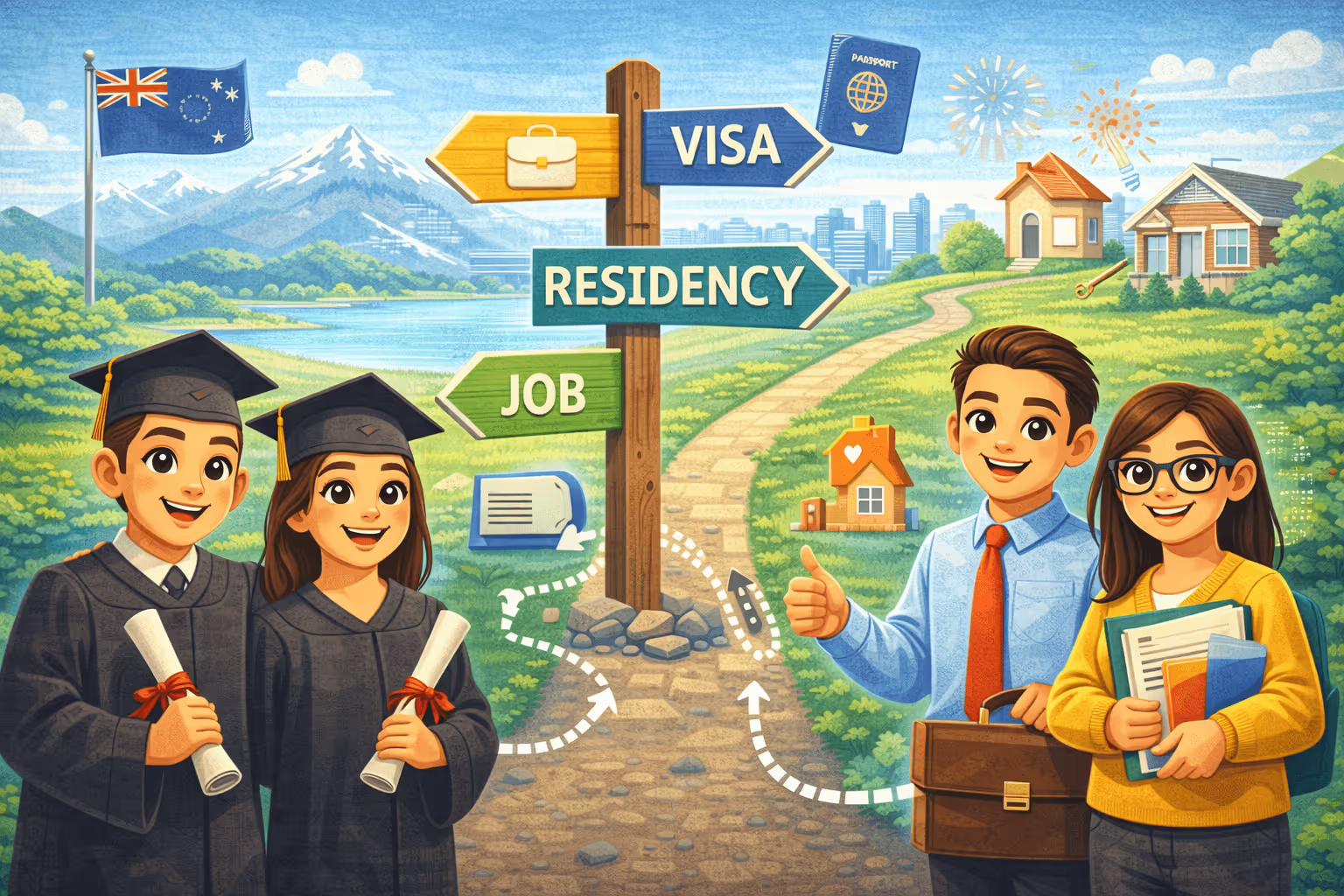
Graduates of high-demand courses in New Zealand can access post-study work visas, allowing them to gain valuable local industry experience after completing their qualification. This practical exposure significantly improves employability and helps students transition smoothly into the workforce.
Many roles connected to New Zealand’s skill shortage lists also provide pathways toward long-term residence. Fields such as healthcare, engineering, IT, education, and construction often qualify for work-to-residence options. As a result, studying in a high-demand field can serve as both a career investment and a strategic immigration pathway, making education in 2026 a powerful step toward permanent settlement.
How to Choose the Right Course in New Zealand for 2026

Matching Career Goals with Industry Demand
Choosing the right course means balancing your personal interests with current labor market demand. While passion is important, aligning your studies with industries experiencing skill shortages in New Zealand can significantly improve your job prospects after graduation. Research industry trends, employment rates, and future growth sectors before applying. A well-informed decision increases both career stability and long-term opportunities.
Budget, Scholarships, and Living Costs
Before selecting a course, carefully evaluate tuition fees, accommodation expenses, and daily living costs in New Zealand. Financial planning is essential to ensure your study journey remains stress-free and sustainable. Explore available scholarships, grants, and part-time work options to reduce overall expenses. A realistic budget plan helps you focus on academic success while managing your finances effectively.
FAQs About High-Demand Courses to Study in New Zealand – 2026

1. Which courses have the best job prospects in 2026?
IT, engineering, healthcare, education, and construction-related courses offer the strongest employment outcomes.
2. Are high-demand courses linked to residency options?
Yes, many align with skill shortage roles that support work-to-residence pathways.
3. Is New Zealand good for international students in 2026?
Absolutely. It offers quality education, safety, and strong post-study opportunities.
4. Do vocational courses offer good careers?
Yes, trade and vocational programs often lead to immediate employment and high demand.
5. Are scholarships available for these courses?
Many institutions and the government offer merit-based and need-based scholarships.
6. Can I work while studying?
International students are generally allowed to work part-time during studies and full-time during breaks.
Conclusion: Planning Your Future with the Right Course Choice

Choosing from the high-demand courses to study in New Zealand – 2026 is about more than education—it’s about building a future. By aligning your studies with New Zealand’s skill needs, you gain a globally respected qualification, strong job prospects, and potential long-term opportunities in one of the world’s most livable countries.
With careful planning, informed decisions, and the right course, 2026 could be the year your international career truly begins.