September vs January vs May Intake in Canada: Which Intake Is the Best?


If you're planning to study in Canada , one of the first decisions you'll face isn't which university to choose — it's which intake to apply for. An "intake" simply refers to the term when a university opens admissions and classes begin. Canadian institutions run their academic year around three main intakes, and each one comes with its own set of programs, deadlines, and opportunities.
Choosing the right one matters more than most students realize. It affects which programs you can apply to, how much competition you'll face, whether scholarships are available, and how much time you have to prepare your documents and study permit application.
This guide compares September vs January vs May intake in Canada in detail, so you can decide which timeline actually fits your academic background, budget, and career goals — rather than just following what a friend or senior did.
What Are the Main Intakes in Canada?
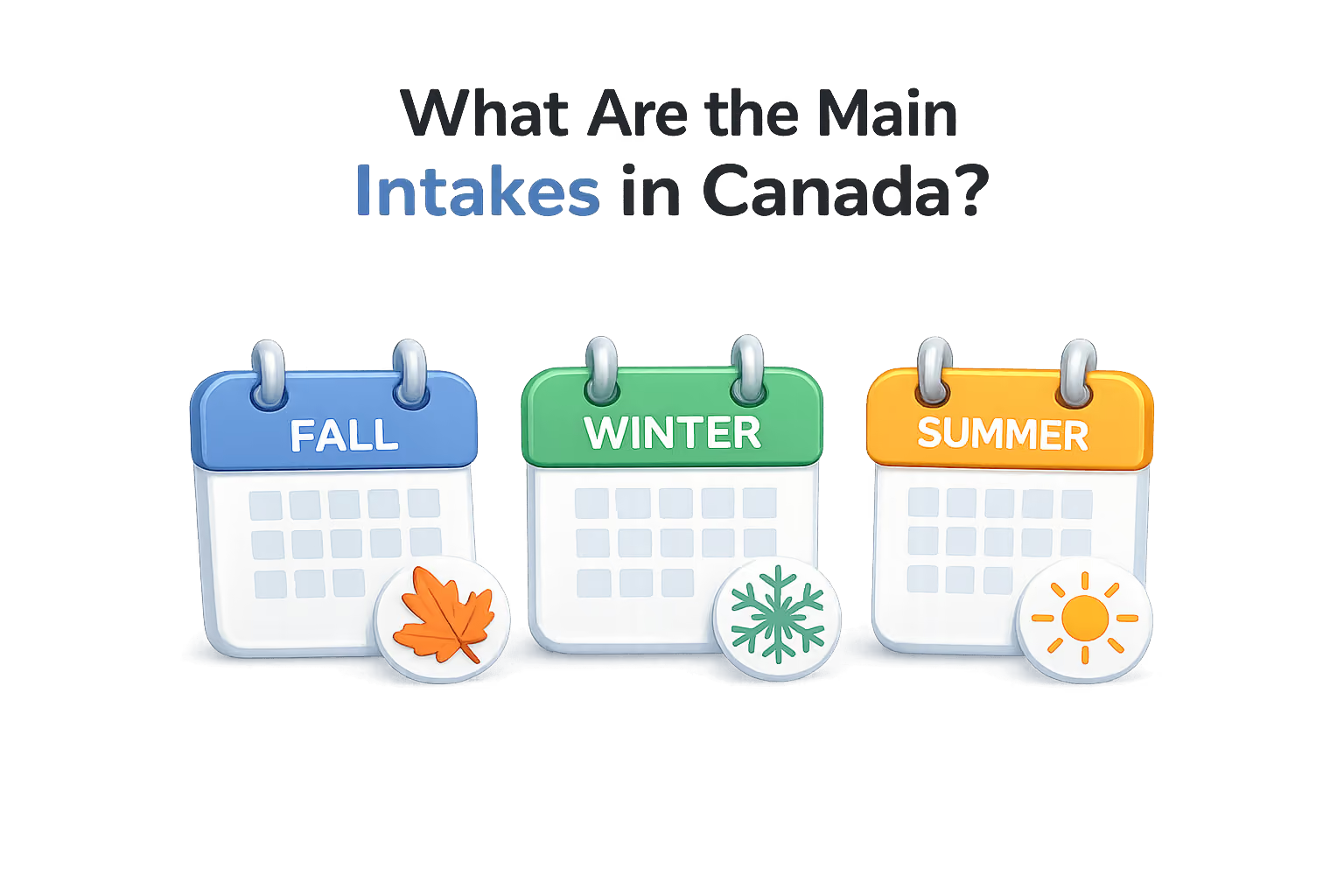
In short: Canada has three intakes — September (Fall), January (Winter), and May (Spring/Summer) — with September offering the widest range of programs and the other two serving as strong alternatives for students who need more preparation time or missed the fall deadline.
Canadian universities and colleges structure their academic year around these three entry points:
September (Fall) Intake: This is the main intake and the start of the full academic year. Most bachelor's and master's programs open here, and it's when campuses are at their busiest with orientation events, clubs, and full course selection.
January (Winter) Intake: A mid-year intake that many universities and colleges use as a second entry point into existing programs. It's popular with students who missed the September deadline or need extra months to prepare their application, English test scores, or finances.
May (Spring/Summer) Intake: A smaller intake offered mainly by colleges and select university programs. Fewer institutions participate, but it can work well for specific diplomas, certificate programs, or students who want to start sooner rather than waiting for September.
Not every university offers all three intakes for every program, so it's worth checking directly with your target institutions before finalizing a plan.
Every university sets its own deadlines, program list, and funding rules for each intake, so treat this table as a general guide rather than a fixed rule for every institution.
September Intake in Canada
September is the primary intake in the Canadian education system, and most institutions build their academic calendar around it.
Why it's the primary intake: Because the full academic year begins in September, universities open the largest number of seats, programs, and specializations for this term.
Program availability: Almost every undergraduate and graduate program is open for September admission, including many that aren't offered in January or May at all.
University participation: Virtually all Canadian universities and colleges accept applications for this intake, giving you the broadest set of institutions to choose from.
Scholarship opportunities: Many entrance scholarships and funding packages are tied to the September intake, though the exact amount, eligibility, and availability depend entirely on the university and program you apply to.
Campus activities Fall brings: orientation week, club fairs, and a fuller campus atmosphere, since most new and returning students arrive at the same time.
Advantages
- Widest choice of programs and universities
- Strongest scholarship and funding options at many institutions
- Larger peer group and more social/networking opportunities
Disadvantages
- Highest competition among applicants
- Earlier application deadlines, which can be tough if you're not fully prepared
- Popular programs may fill up quickly
Who should choose this intake Students who have their documents, test scores, and finances ready well in advance, and who want access to the widest possible range of programs.
January Intake in Canada
January is a well-established second entry point for many Canadian institutions.
Program availability: Many diploma, undergraduate, and graduate programs accept students in January, though some specialized or research-heavy programs may only admit in the fall.
Benefits: January gives you a few extra months to strengthen your application, retake an English proficiency test, or arrange finances, without losing an entire year.
Limitations: Some programs and scholarships are only available for the September intake, so your options may be narrower depending on your field of study.
Ideal applicants: Students who missed the September deadline, needed more time to prepare, or decided on Canada later in their planning process.
Advantages
- Extra preparation time compared to September
- Slightly less competition for many programs
- Still offered by a large number of universities and colleges
Disadvantages
- Fewer program options than September for some fields
- Some scholarships may not be available
- Winter weather adjustment for students arriving from warmer climates
May Intake in Canada
May is the smallest of the three intakes and is worth considering carefully based on your specific program.
Limited course availability: Far fewer universities offer this intake, and it's more common among colleges for diploma and certificate programs.
Smaller class sizes: Because fewer students enroll in May, class sizes tend to be smaller, which some students find helpful for more individual attention.
Suitable student profiles: Students applying to specific college programs, those who missed both September and January, or those who want to start their studies sooner rather than waiting for the next major intake.
Advantages
- Lower competition due to fewer applicants
- Smaller, more focused class environments
- A useful option if you missed earlier intakes
Disadvantages
- Much narrower program selection
- Fewer scholarship opportunities overall
- Not offered at all by many universities
Which Intake Is Best for Bangladeshi Students?
There's no single "best" intake for every Bangladeshi student — the right choice depends on your academic stage and circumstances.
Students completing HSC: If you've just finished HSC and have your results and documents ready early, September often makes sense because it opens the widest range of undergraduate programs. If your results come out later, January can be a realistic backup.
Undergraduate applicants: Students applying with completed diplomas or transfer credits often have flexibility across all three intakes, so the decision comes down to program availability at your target universities.
Master's applicants: Most master's programs, especially research-based ones, are built around September. January is available for some professional master's programs, so it's worth checking program-by-program.
Students needing more preparation time: If you need extra months for IELTS/English test scores, financial documentation, or a stronger academic profile, January or May can give you that breathing room without missing a full year.
Students who missed the September intake: January is usually the most practical next step, with May as a further option depending on your program.
Students looking for greater program choices: September remains the strongest choice, since it consistently offers the widest range of programs and universities.
The right decision comes down to matching your readiness and target program with what's actually available at each intake — not choosing based on what a friend or relative did.
Because processing times and requirements change, it's best to confirm current deadlines directly with your chosen university and with IRCC before finalizing your plan.
Common Mistakes Students Make When Choosing an Intake

Applying too late: Waiting until the last few weeks before a deadline limits your university choices and puts pressure on your study permit timeline.
Choosing an intake based only on friends' decisions: What worked for someone else may not fit your program, budget, or academic readiness. Base your decision on your own situation.
Ignoring scholarship deadlines: Many scholarship deadlines fall earlier than the general admission deadline, so checking only the application deadline can mean missing funding opportunities.
Not checking program availability: Not every program is offered in every intake. Always confirm directly on the university's website before assuming a program is open for January or May.
Rushing the visa application: Submitting a study permit application at the last minute increases stress and risk. Start as soon as you accept your offer.
Missing document preparation timelines: Transcripts, English test scores, and financial documents often take weeks to arrange. Start collecting them early rather than after you've chosen a university.
Practical tip: Build your timeline backward from your intended intake, and give yourself buffer time at every stage.
Conclusion
September, January, and May intakes each have their own strengths. September offers the widest range of programs and university choices, January gives you valuable extra preparation time, and May can suit students targeting specific programs or smaller class environments.
The best intake for you depends on your academic readiness, preferred program, budget, and how much time you have to prepare a strong application. Planning early — regardless of which intake you choose — gives you a better chance of securing admission and putting together a solid Canada study permit application.
If you're still weighing your options, the team at CSB Study Abroad can walk you through university selection, application timelines, and study permit guidance based on your specific academic background and goals. Reach out to CSB Study Abroad for a personalized consultation before you finalize your intake decision.